About
Estela B. Diaz is a Lecturer in the Princeton Writing Program. Her research areas include culture, economic sociology, education, family, elites, gender and sexuality, and qualitative methods. Estela’s current book project examines the commodification of child rearing through a case study of private nursery, preschool, and kindergarten admissions in New York City.
Estela received her Ph.D. in Sociology from Columbia University in 2023 and A.B. in Sociology with a certificate in Gender and Sexuality Studies from Princeton University in 2014. Estela's work has been funded by a Mellon Mays Undergraduate Fellowship, Mellon/ACLS Dissertation Completion Fellowship from the American Council of Learned Societies, and a National Science Foundation Graduate Research Fellowship. Prior to her role as a lecturer, she was a Presidential Postdoctoral Research Fellow in the Princeton University Department of Sociology, and Postdoctoral Research Associate at the Education Research Section (ERS).
Before pursuing a Ph.D. in sociology, Estela worked as an undergraduate admissions officer at Princeton University and helped organize Princeton’s Office of Religious Life’s first ever “Poverty and Peacemaking” Conference, an interdisciplinary gathering on the role of poverty alleviation as a critical component in peacebuilding efforts.
Research
Overall, my research explores how culture and resources shape action in families, communities, and organizational settings. I utilize archival materials, ethnographic observations, and semi-structured interviews to investigate how families sustain or enhance their status and wealth using institutional resources. My scholarship highlights the importance of examining variation between and within families along the axes of disability, race, and gender. This variation adds new dimensions to long-standing theories of social reproduction and cumulative advantage.
In my primary line of work, I bridge the sociological literature on status and economic sociology with the sociology of education. I examine education as a cultural good using the case of admissions to private nursery, preschool, and kindergartens in New York City. Most research on admissions to elite educational institutions focus on entry to high school, college, or graduate settings. While these gatekeeping moments are illuminating and of consequence to long-term outcomes, they cloud numerous mechanisms at play earlier in the life cycle and educational systems. My research on the highly selective early admissions process reveals the tenuous construction of merit and highlights a critical moment when parental and organizational decision-making lay the foundation for life-long wealth and educational achievement gaps.
My secondary line of research includes collaborations situated within my broader interests in culture and inequality. While these projects vary in data type and local contexts, all are guided by the question of asking how culture and inequality are shaped by different social groups and organizational features.
Publications
Abstract
Within classical sociological accounts of capitalism, families are curious remnants of the past. Contemporary elite sociology dismisses the family in a different way: by primarily focusing on individual men. When the family does appear within elite studies, scholars frequently follow a stratification framework, which focuses on the transmission of social position from parents to children. This paper breaks with these dominant tendencies to understand the elite family as a shared site of work. Families are social phenomenon in their own right: they are the makers of capitalist enterprises, and they endure and thrive within capitalism. Children do not simply receive potential positions from their parents; their actions can augment or diminish family social positions. Families are impacted by previous generations' material, socio‐cultural and narrative work, and by the work done by various members within a generation. The approach we offer is part of a recent development within the sociology of elites to understand the family as the central unit of analysis, with multiple members (children, siblings, spouses, parents, etc.) serving as units of observation. Our approach foregrounds how gender and sexuality structures he work that families do. We develop our approach by tracing multiple generations of the Astor family.
Abstract
In the mid-twentieth century, specific characteristics of informal labor markets facilitated the development of lesbian desire among African American women with those attractions. We analyze archival materials on Black lesbians in Detroit, Michigan, to theorize underground economies as liminal spaces that served three key functions. First, off-the-books jobs provided income-generating opportunities to reduce financial precarity. Second, workspaces in urban leisure industries attracted Black sexual minorities as both laborers and consumers, offering the potential for self-discovery and a sense of belonging. During this period, the temporal nature that defined work in underground labor markets was consistent with the transitional state of lesbian sexuality as an identity around which to cohere alongside race. The liminality inherent in Black women’s self-definitions was supported by the temporal attributes of physical spaces where their work took place. Together, those experiences laid the groundwork for a nascent sexual community that could center African American culture.
Abstract
This work investigates the experiences of African American lesbians who came into adulthood in the mid-twentieth century and were at or approaching retirement age at the time of study. It draws from sociological frameworks of aging, analyzing oral histories, group interviews, and archival materials to consider how the socio-historical contexts of inequalities based in race, gender, and sexual orientation have impacted Black lesbian women in older age. First, African Americans were subjected to labor market discrimination on several fronts and were varied in their ability to access stable employment and advanced education as young adults. Now there is a bifurcation, with some experiencing economic security and others experiencing precarity in their later years. Second, many who lived their young adulthood as lesbians did not become parents or experienced long periods of absence in child rearing. As they advance in age, they lack a crucial source of support that others with adult children can rely on. Finally, while initially fraught relationships with kin became less strained over time, lesbian sexuality was still an “open secret” for many of these women and a measure of vulnerability persists in their familial attachments. When care needs call for aid from or to extended family members, Black lesbians in older age may not receive sufficient support to mitigate experiences of social isolation or health crises, the likelihood of both increasing over the life course.
Abstract
Prior research has described how middle-class and affluent families draw on private supplemental educational resources to help their children maintain an advantage in an unequal educational landscape. As the market for these privatized services continues to grow, we turn our attention to those supplying supplemental educational services. In this paper, we draw on research theorizing moral understandings of work to examine how private admissions consultants perceive popular concerns about inequality, and how these understandings shape how they view their work. We draw on a cross-study comparison of two original datasets: first, 50 interviews with college admissions consultants in New York and California; and second, a two-year ethnography of an educational consulting firm with preschool and kindergarten admissions consultants in New York City. We find that to make sense of their role in the unequal supplemental education marketplace, admissions consultants define their roles in ways that position themselves as qualified, ethical, and properly motivated, and they justify their roles by describing how they are similar to other legitimate professions and how they can help to alleviate or atone for inequality. These moral meaning-making processes are shaped by the distinctive features of the admissions consulting profession.
Abstract
Historically, elite schools have selected students in ways that reproduce advantages for dominant groups and exclude groups deemed undesirable. The specific outgroup in question has changed over time, but the underlying logic used to exclude these groups is often related to disability. Yet, disability as a social category has received minimal attention in discussions of elite reproduction. In this article, we draw on qualitative data collected from elite independent pre-K–12 schools to show that disability is indeed a salient basis of selection into elite educational environments, one that begins at the earliest moments of educational sorting: admission to elite early childhood programs. Through interviews with admissions personnel, we show that elite independent schools explicitly structure their admissions processes to identify—and exclude—children who are perceived as having or being at risk of developing any type of disability, regardless of impairment type or support needs. We argue that admissions practices at elite independent schools (1) serve as a form of social closure intended to restrict enrollment to young children perceived as able-bodied and neurotypical, and (2) represent a case of essentializing merit, in which elite gatekeepers construct merit as an intrinsic, rather than achieved, property of individuals.
Abstract
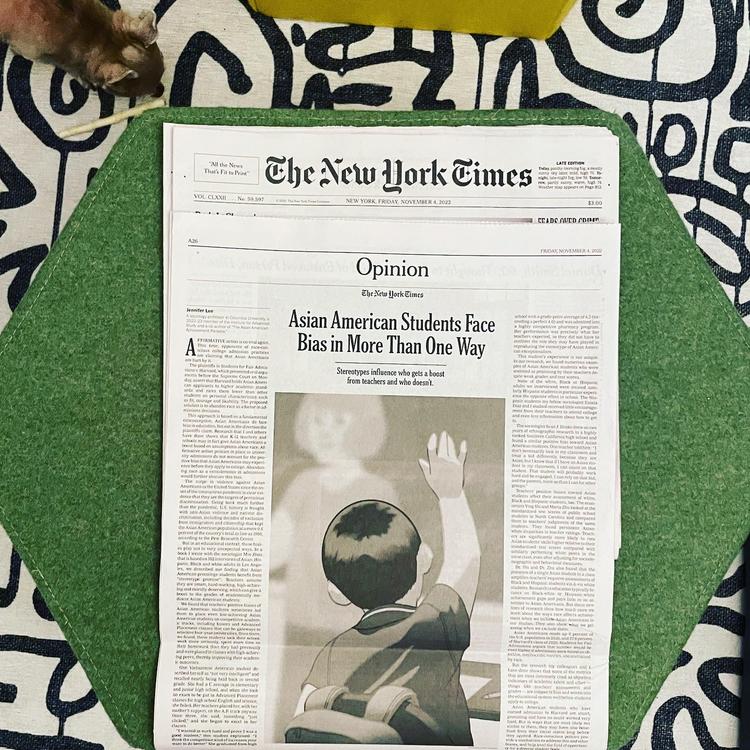
Mexican Americans are the largest immigrant and second-generation group in the country. Their sheer size coupled with their low educational attainment have generated concerns that, unlike Asian groups like Chinese Americans, Mexican Americans do not value education—a claim wielded by opponents of affirmative action. Drawing on analyses of the Immigration and Intergenerational Mobility in Metropolitan Los Angeles study, we challenge two underlying presumptions of this claim: the children of Mexican immigrants are less successful than the children of Chinese immigrants; and they are less committed to success. Centering our analyses on the hypo-selectivity of U.S. Mexican immigration, we maintain that how we measure success determines which group is more successful. Moreover, we show that second-generation Mexicans adopt diverse success frames that stem from cultural heterogeneity. Consequently, they pursue variegated strategies of action that include class-specific ethnic resources in their quest for success. Despite their remarkable intergenerational gains, the racialization of low achievement and the mark of a criminal record can be a death knell for mobility for the children of Mexican immigrants. Our research provides fruitful context to inform the current debate about affirmative action.
Teaching
I see my teaching practice as co-constitutive with my life as a researcher. Currently, I teach a writing seminar for first-year students at Princeton called “Love & Money” and the relationship between intimacy and markets. Please see my CV for more information on courses I've taught.
Instructor of Record, “Love & Money” Writing Seminar, Princeton University, 2025 - present
Instructor of Record, “Sociology 101,” Prison Teaching Initiative, Fall 2026
Instructor of Record, “Data Analysis in the Social Sciences” Prison Teaching Initiative, Fall 2026
“Charles Tilly Award for Teaching and Service” Department of Sociology, Columbia University, 2019
Instructor of Record, “Sociology of Education,” Columbia University, 2022
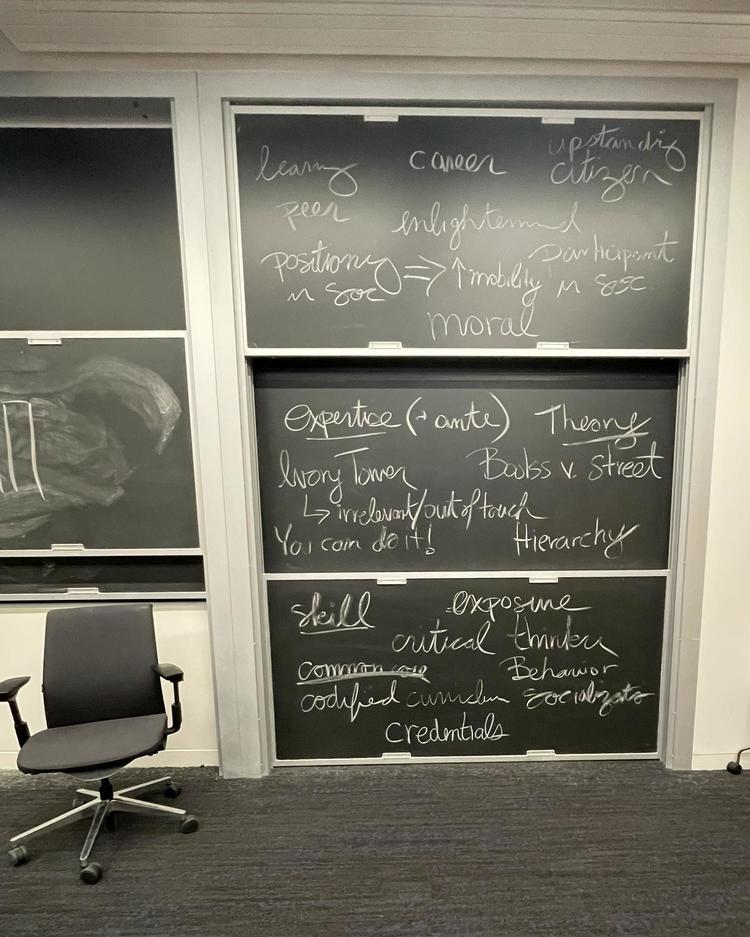
Day 1 of “Sociology of Education”
Contact
Dr. Estela B. Diaz
Princeton University
New South
Princeton, New Jersey 08544
ebdiaz (at) princeton (dot) edu
Pronouns: she/her